Photography · Photo essay & exhibition
Rooting The Divine in Tuwed
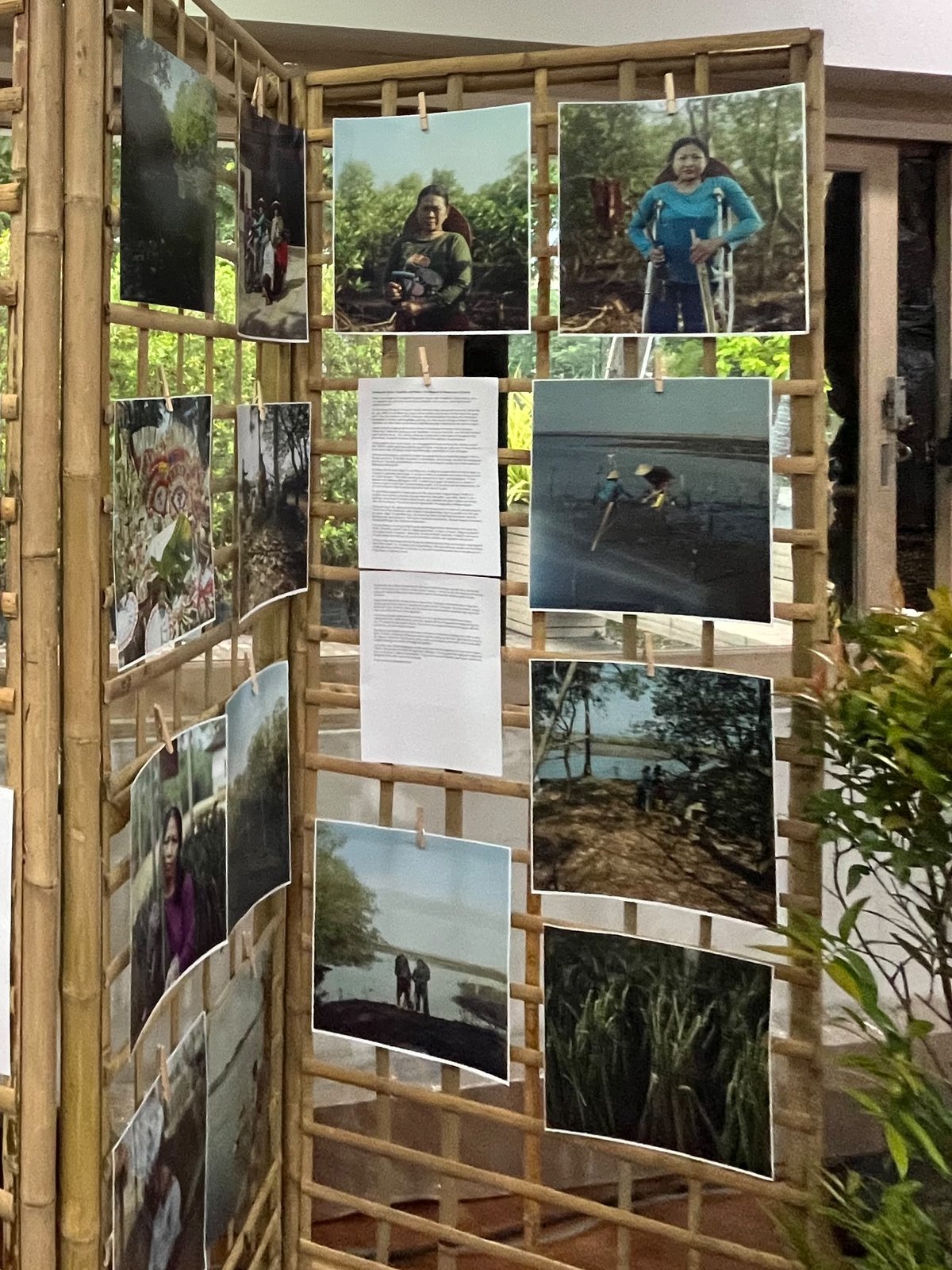
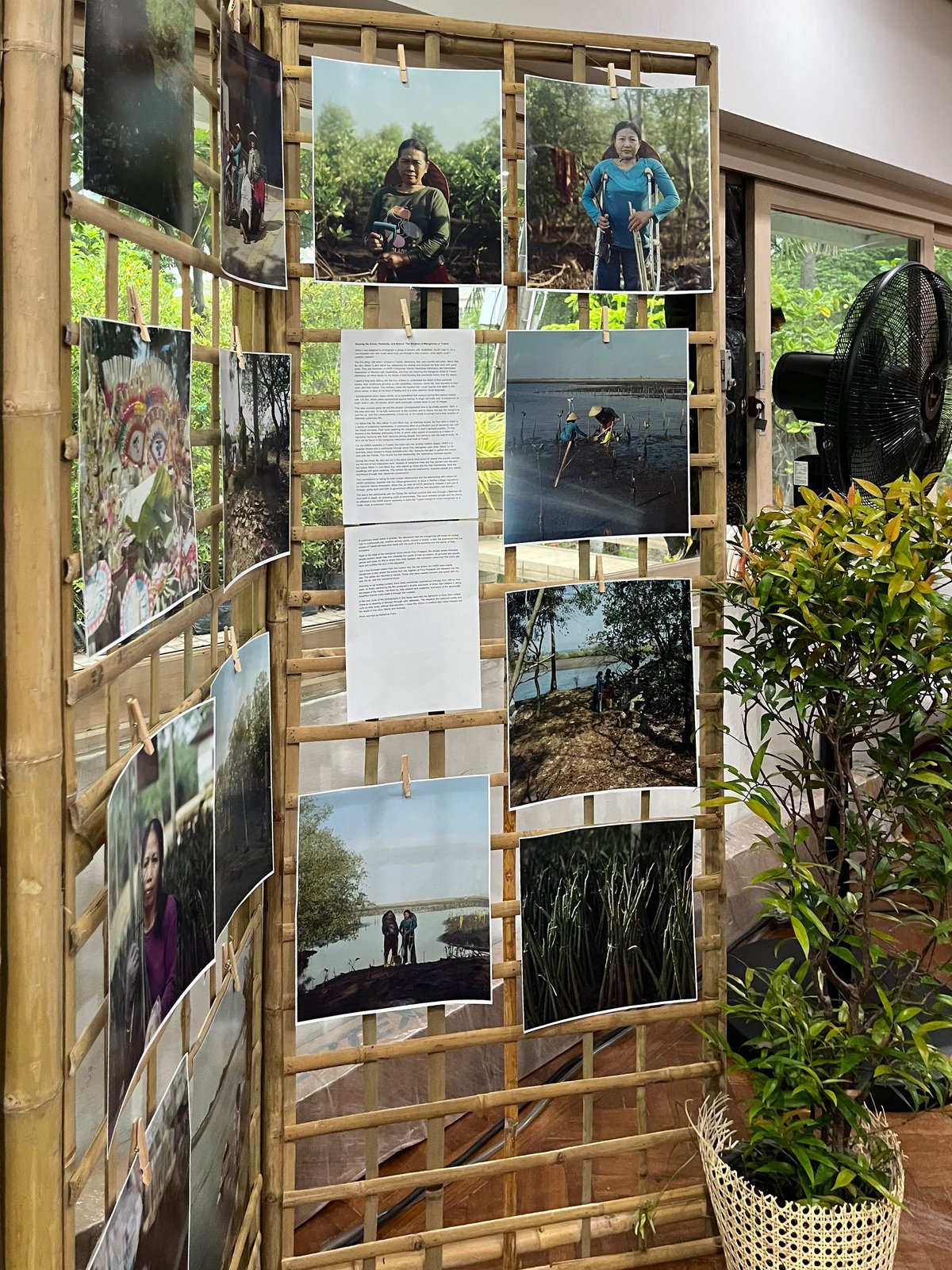
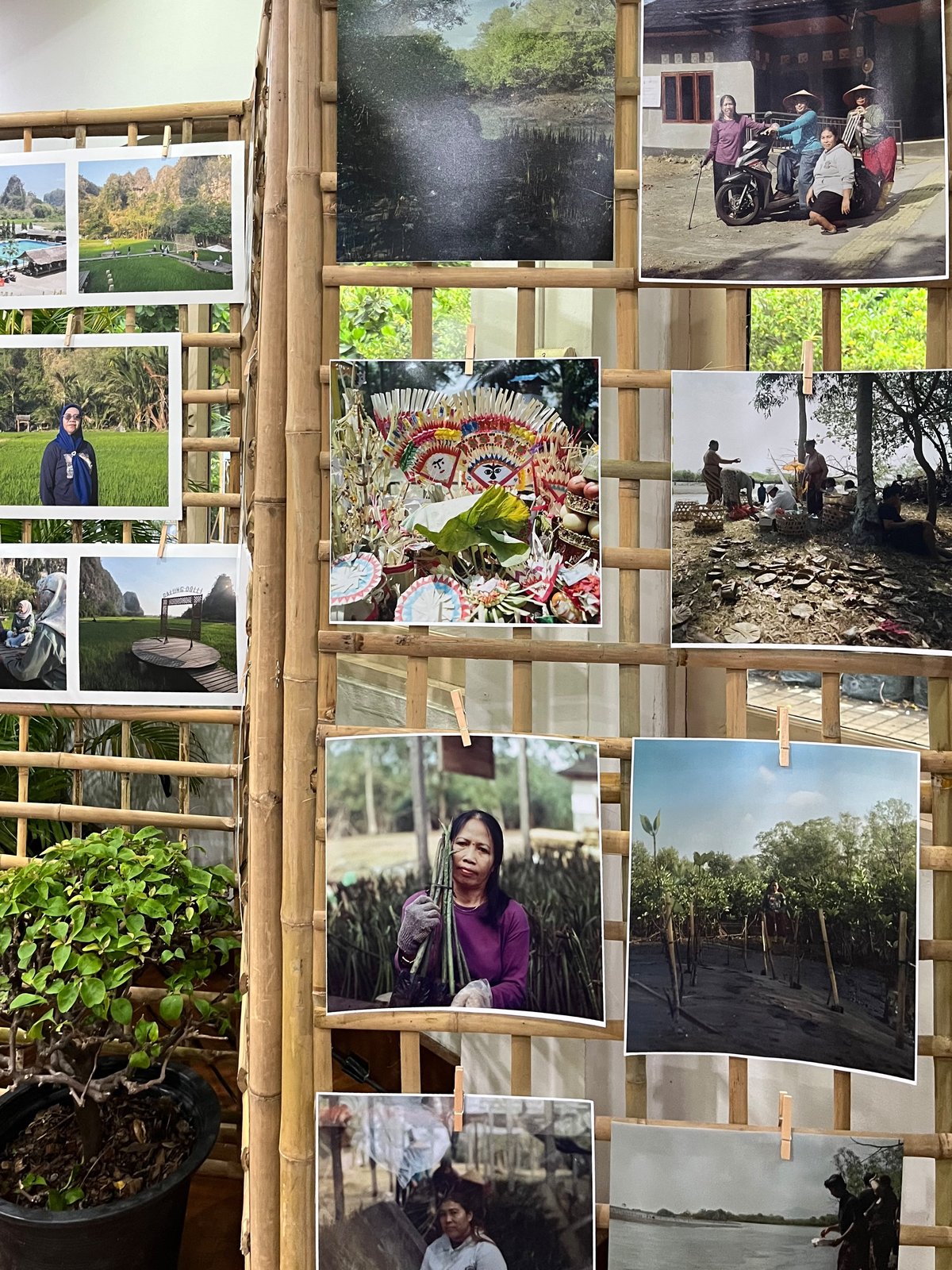
Women with disabilities restore the mangrove forest of Tuwed, on the west coast of Bali. Sixteen photographs on 6×6 medium format film, shown at Bangkok Climate Action Week.
Mengakarnya Ketuhanan, Manusia dan Alam: Kebijaksanaan Bakau di Tuwed
Saat aku mendapat tugas untuk memotret grup perempuan difabel, ada keraguan dalam diriku muncul. Sebagai laki-laki non-difabel, yang tidak akan pernah bisa menempatkan diriku dalam posisi mereka, apa kedalaman yang bisa aku tangkap?
Hal pertama yang saya rasakan saat sampai di Tuwed, Jembrana, Bali, adalah kehangatan dan kebanggaan. Mbok Dwi, Bu Jero, Mbok Tu & Mbok Ayu menyambut penuh kehangatan dan menunjukkan pekerjaan mereka dengan penuh kebanggaan. Mereka adalah anggota Himpunan Wanita Disabilitas Indonesia (HWDI) yang sedang merestorasi hutan bakau di daerah Tuwed, Jembrana. Upaya yang dilakukan karena ancaman banjir rob yang kerap mengintai daerah Jembrana.
Saya berbincang lama dengan mereka berempat untuk mendapatkan informasi dan kedalaman kisah pribadi mereka. Cerita mulai dari masa kecil sebagai difabel, romansa, kehidupan berkeluarga, totalitas pekerjaan, hingga harapan mereka. Keintiman ini membuat saya optimis untuk bisa menangkap kedalaman di esai foto ini. Paling tidak dalam kedalaman level rasa dan bahasa visual yang sifatnya lebih abstrak.
Saya memotret semua adegan dengan lambat, dengan kamera film medium format Hasselblad 6x6, dengan film 120, sehingga hasilnya bujur sangkar yang simetris. Dalam satu roll film ada 12 gambar saja. Total yang saya potret ada 4 roll, 48 gambar, dan pada akhirnya dikurasi menjadi 16 gambar saja.
Proses pemotretan yang lambat ini memberi waktu bagi saya dan para subyek foto ini untuk benar-benar hadir utuh 100%, hadir di saat ini dan di sini. Untuk saling terkoneksi penuh. Terkoneksi satu sama lain, terkoneksi dengan alam, laut, bakau dan udara. Dan rupanya konektivitas ini bukan hanya sekadar konsep, namun sebuah laku hidup masyarakat adat Bali.
Bagi Mbok Dwi, Bu Jero, Mbok Tu dan Mbok Ayu, sebagai orang Bali -dari kelahiran sampai kematian- hidup adalah rangkaian upacara adat. Rangkaian upaya pembersihan dan penyatuan dengan Semesta Raya.
Apa yang mereka lakukan dalam restorasi bakau ini pun adalah laku spiritual. Tri Hita Karana adalah falsafah hidup masyarakat Bali, di mana segala aspek kehidupan adalah keharmonisan hubungan dengan Tuhan, hubungan dengan manusia, dan hubungan dengan alam raya. Semua kegiatannya lengkap bisa ditemui dalam kegiatan restorasi bakau di Tuwed ini.
Bagi para anggota Himpunan Wanita Disabilitas Indonesia di wilayah Tuwed, koneksi antar sesama ini dirasa sangat penting. HWDI hadir sebagai sarana nyata dan komunitas untuk saling menguatkan antar sesama. Mbok Tu misalnya, sangat menanti kegiatan ini setiap hari, karena ia bisa berkumpul dan sekadar ngobrol dengan teman-teman. Inilah cermin hubungan yang pertama, hubungan antar manusia.
Saat pemotretan, Bu Jero menuntun saya ke lokasi kebanggaannya, di mana ia dengan bangga menunjukkan hasil karya restorasinya, rumpunan pepohonan bakau yang ia tanam dalam dua tahun terakhir. Mbok Tu dan mbok Ayu yang tidak punya akses untuk turun langsung ke lapangan juga sangat telaten dalam melakukan pembibitan. Inilah cermin hubungan kedua, antara manusia dengan alam. Lewat upaya-upaya pelestarian yang nyata.
Komitmen dalam menjaga hubungan antar manusia dan hubungan dengan alam tersebut, membawa HWDI Jembrana bersama pemerintah desa menerbitkan PerDes (peraturan desa) tentang restorasi alam yang inklusif. Mbok Dwi sebagai ketua HWDI Jembrana adalah penggagas dan pelaksana yang bolak-balik ke kantor pemerintahan demi keluarnya peraturan baru ini.
Yang terakhir adalah hubungan dengan yang Ilahi. Laku spiritual dari kelahiran hingga matinya seorang Bali. Rangkaian upacara yang tiada henti. Cerminan hubungan manusia dengan yang Ilahi ini dicerminkan oleh advokasi tim HWDI untuk menjadikan hutan bakau Tuwed sebagai Hutan Adat.
Jika status Hutan Adat berhasil didapat, kepastian bahwa hutan bakau tersebut tidak akan berubah menjadi aktivitas komersial -seperti tambak, resor maupun hotel- juga adalah kepastian bahwa hubungan masyarakat Tuwed dengan roh semesta dan roh leluhur tetap terjaga.
Tepat di bibir pantai hutan bakau terdapat Pura Prajapati. Pura Prajapati adalah pura tempat masyarakat Bali melakukan upacara kematian dan pemujaan roh leluhur. Lingkungan Pura Prajapati biasanya sakral dan tenang, karena di sinilah tempat dilakukannya Ngaben, upacara kremasi pembakaran jenazah dan penyucian bagi jiwa orang yang meninggal.
Hanya beberapa ratus meter saja dari pondok pembibitan- lokasi penanaman bakau yang dilakukan oleh tim HWDI juga adalah lokasi pelarungan abu Ngaben dari Pura Prajapati. Abu tersebut dikembalikan lagi ke alam. Manusia yang meninggal kini menyatu kembali ke laut, ke udara, ke dalam hutan bakau.
Dalam proses pemotretan dengan kamera analog ini, kadang ada kesalahan mekanik yang saya biarkan apa adanya. Kadang saat dikokang malah menjadikannya double-exposure, kadang ada bocoran cahaya di pinggir-pinggir film. Saya biarkan hadir sepenuhnya tanpa modifikasi, malah beberapa yang tidak sempurna secara teknis saya loloskan dalam proses kurasi.
Pada akhirnya, semua foto dalam esai ini tidak masuk dalam kamar terang untuk diedit warna dan nuansanya. Tidak ada pengarahan perasaan lewat alterasi warna. Negatif film yang digunakan menangkap realita dan warna apa adanya, tanpa proses dramatisasi. Semoga pemilihan medium ini juga bisa membantu pemirsa untuk melihat kedalaman cerita ini dengan jernih dan jujur.
Mahatma Putra (23/09/2026)
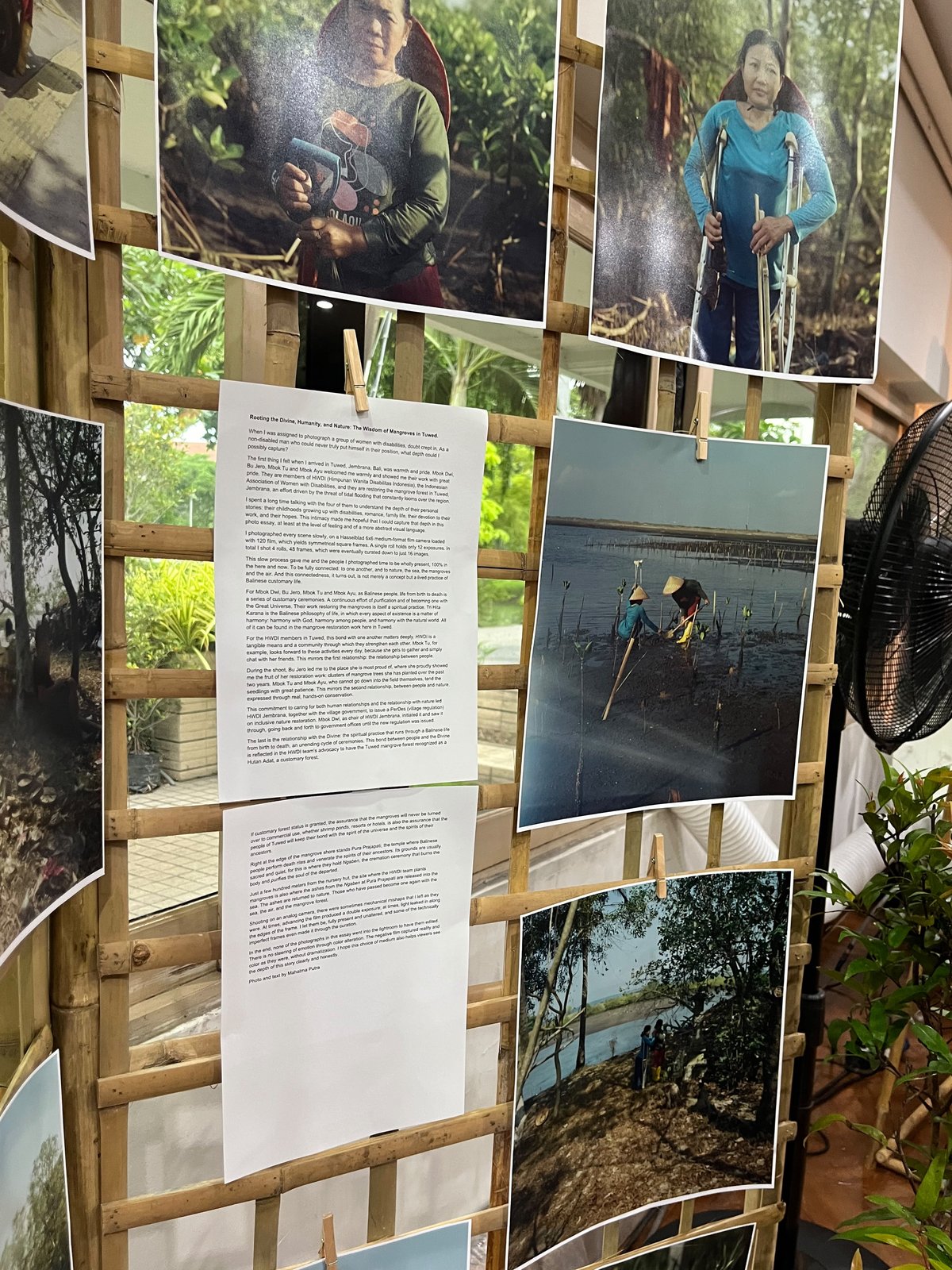
Rooting the Divine, Humanity, and Nature: The Wisdom of Mangroves in Tuwed
Originally written in Bahasa Indonesia
When I was assigned to photograph a group of women with disabilities, doubt crept in. As a non-disabled man who could never truly put himself in their position, what depth could I possibly capture?
The first thing I felt when I arrived in Tuwed, Jembrana, Bali, was warmth and pride. Mbok Dwi, Bu Jero, Mbok Tu and Mbok Ayu welcomed me warmly and showed me their work with great pride. They are members of HWDI (Himpunan Wanita Disabilitas Indonesia), the Indonesian Association of Women with Disabilities, and they are restoring the mangrove forest in Tuwed, Jembrana, an effort driven by the threat of tidal flooding that constantly looms over the region.
I spent a long time talking with the four of them to understand the depth of their personal stories: their childhoods growing up with disabilities, romance, family life, their devotion to their work, and their hopes. This intimacy made me hopeful that I could capture that depth in this photo essay, at least at the level of feeling and of a more abstract visual language.
I photographed every scene slowly, on a Hasselblad 6x6 medium-format film camera loaded with 120 film, which yields symmetrical square frames. A single roll holds only 12 exposures. In total I shot 4 rolls, 48 frames, which were eventually curated down to just 16 images.
This slow process gave me and the people I photographed time to be wholly present, 100% in the here and now. To be fully connected: to one another, and to nature, the sea, the mangroves and the air. And this connectedness, it turns out, is not merely a concept but a lived practice of Balinese customary life.
For Mbok Dwi, Bu Jero, Mbok Tu and Mbok Ayu, as Balinese people, life from birth to death is a series of customary ceremonies. A continuous effort of purification and of becoming one with the Great Universe.
Their work restoring the mangroves is itself a spiritual practice. Tri Hita Karana is the Balinese philosophy of life, in which every aspect of existence is a matter of harmony: harmony with God, harmony among people, and harmony with the natural world. All of it can be found in the mangrove restoration work here in Tuwed.
For the HWDI members in Tuwed, this bond with one another matters deeply. HWDI is a tangible means and a community through which they strengthen each other. Mbok Tu, for example, looks forward to these activities every day, because she gets to gather and simply chat with her friends. This mirrors the first relationship: the relationship between people.
During the shoot, Bu Jero led me to the place she is most proud of, where she proudly showed me the fruit of her restoration work: clusters of mangrove trees she has planted over the past two years. Mbok Tu and Mbok Ayu, who cannot go down into the field themselves, tend the seedlings with great patience. This mirrors the second relationship, between people and nature, expressed through real, hands-on conservation.
This commitment to caring for both human relationships and the relationship with nature led HWDI Jembrana, together with the village government, to issue a PerDes (village regulation) on inclusive nature restoration. Mbok Dwi, as chair of HWDI Jembrana, initiated it and saw it through, going back and forth to government offices until the new regulation was issued.
The last is the relationship with the Divine: the spiritual practice that runs through a Balinese life from birth to death, an unending cycle of ceremonies. This bond between people and the Divine is reflected in the HWDI team's advocacy to have the Tuwed mangrove forest recognized as a Hutan Adat, a customary forest.
If customary forest status is granted, the assurance that the mangroves will never be turned over to commercial use, whether shrimp ponds, resorts or hotels, is also the assurance that the people of Tuwed will keep their bond with the spirit of the universe and the spirits of their ancestors.
Right at the edge of the mangrove shore stands Pura Prajapati, the temple where Balinese people perform death rites and venerate the spirits of their ancestors. Its grounds are usually sacred and quiet, for this is where they hold Ngaben, the cremation ceremony that burns the body and purifies the soul of the departed.
Just a few hundred meters from the nursery hut, the site where the HWDI team plants mangroves is also where the ashes from the Ngaben at Pura Prajapati are released into the sea. The ashes are returned to nature. Those who have passed become one again with the sea, the air, and the mangrove forest.
Shooting on an analog camera, there were sometimes mechanical mishaps that I left as they were. At times, advancing the film produced a double exposure; at times, light leaked in along the edges of the frame. I let them be, fully present and unaltered, and some of the technically imperfect frames even made it through the curation.
In the end, none of the photographs in this essay went into Lightroom to have them edited. There is no steering of emotion through color alteration. The negative film captured reality and color as they were, without dramatization. I hope this choice of medium also helps viewers see the depth of this story clearly and honestly.
Mahatma Putra (23/09/2026)
- Type
- Photo essay · exhibition
- Shown at
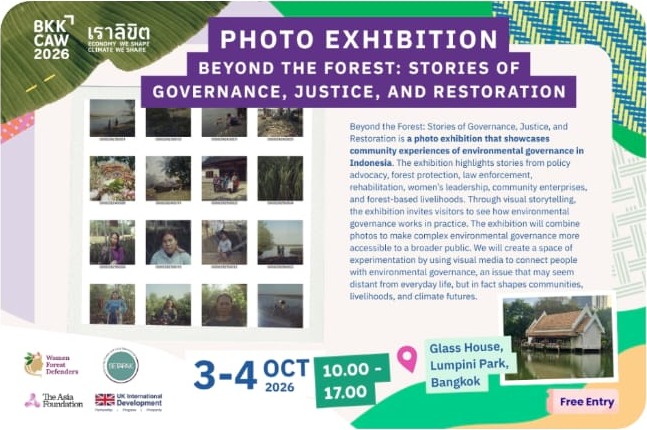
- Beyond the Forest: Stories of Governance, Justice, and Restoration, a photo exhibition organised by The Asia Foundation Indonesia for Bangkok Climate Action Week
- Venue
- Glass House, Lumpini Park, Bangkok · 3–4 October 2026
- Place
- Tuwed, Jembrana, Bali
- With
- HWDI Jembrana (Himpunan Wanita Disabilitas Indonesia)
- Photographs
- 16, curated from 4 rolls, 48 frames
- Medium
- Hasselblad 500C/M, 6×6 · 120 colour negative film, not colour graded
- Text
- Written in Bahasa Indonesia, with an English translation
Photographs
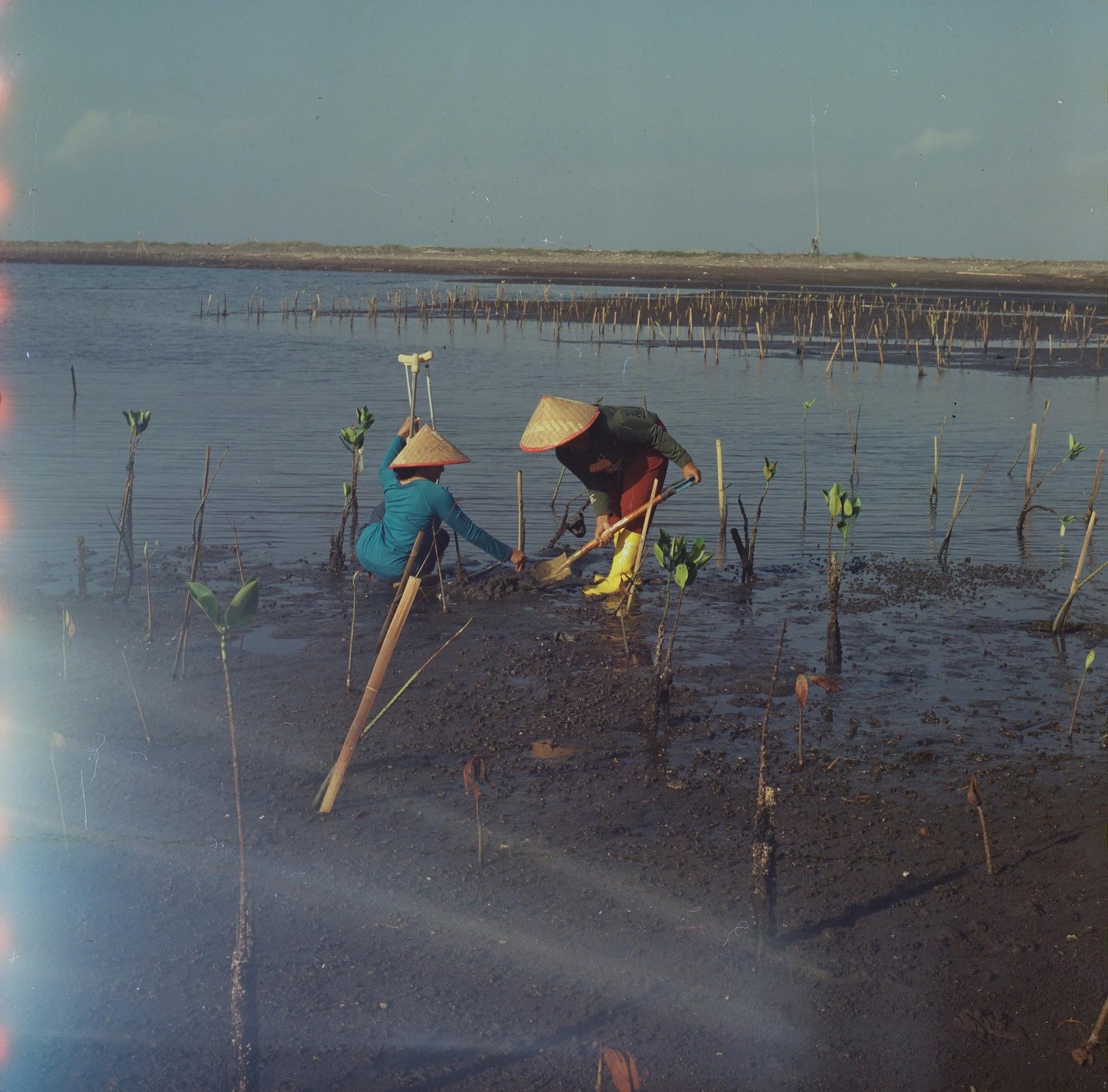
Proses penanaman bakau di bibir pantai dilakukan oleh Mbok Dwi dan Mbok Jero. Medan penanaman bakau tidak selalu mulus, kadang mereka harus turun ke medan berlumpur.
Hasselblad 500C/M (6×6) • IMAX 250D (120)
Mbok Dwi and Mbok Jero planting mangroves along the shoreline. The planting ground is not always easy; at times they have to wade into the mud.
Hasselblad 500C/M (6×6) • IMAX 250D (120)
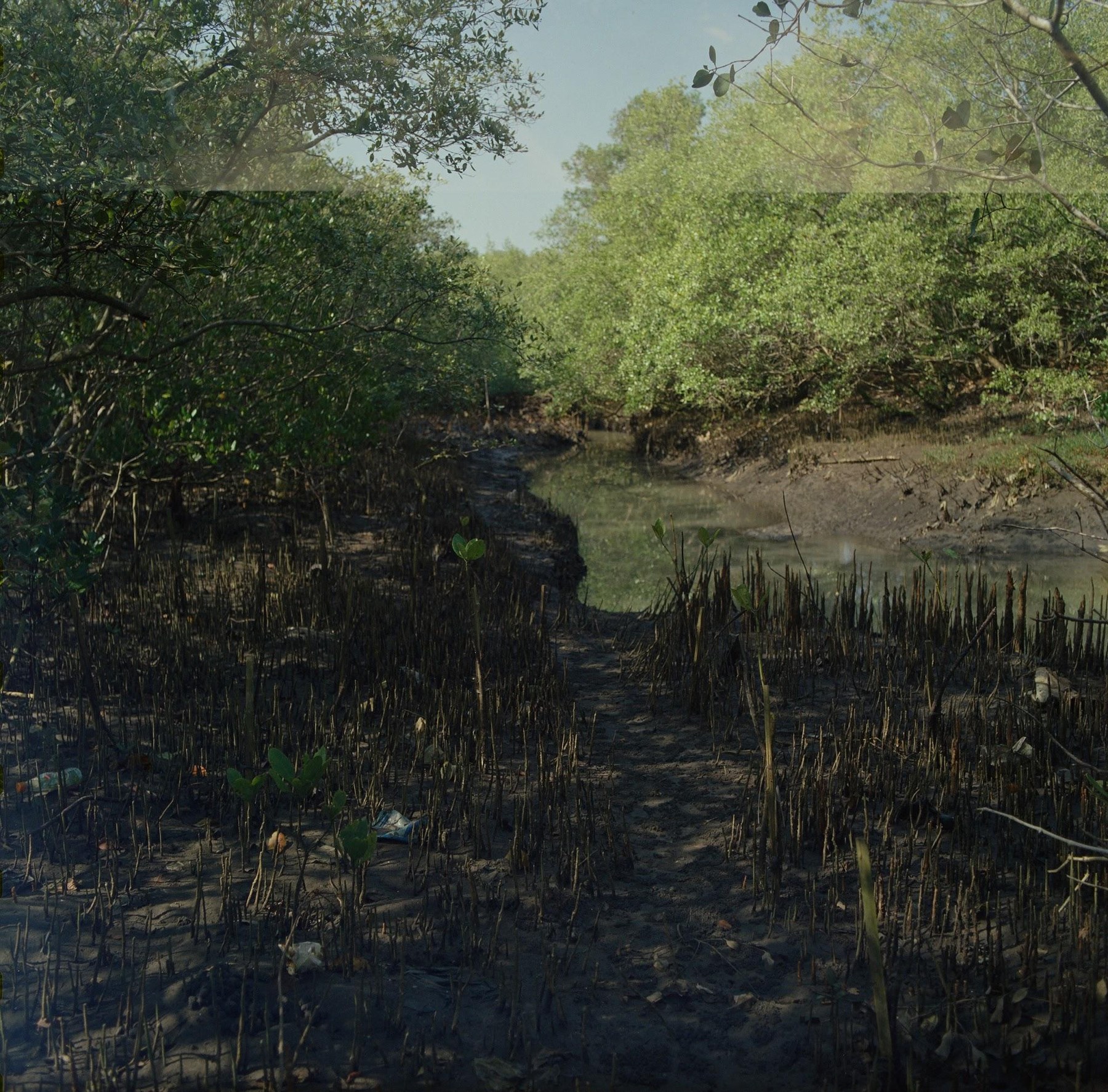
Hutan bakau adalah pelindung utama dari banjir rob di daerah Tuwed, Jembrana. Kegiatan restorasi bakau di sini sangat didukung oleh masyarakat dan desa setempat, terutama setelah terjadinya banjir rob yang rutin terjadi di Jembrana sejak 2021. Pada akhir bulan September 2026 ini, daerah Tuwed sudah ditetapkan BMKG menjadi daerah siaga bencana banjir rob.
Hasselblad 500C/M (6×6) • IMAX 250D (120)
The mangrove forest is the main defense against tidal flooding in Tuwed, Jembrana. Mangrove restoration here is strongly supported by the local community and village, especially since the tidal floods that have hit Jembrana regularly since 2021. As of late September 2026, BMKG, Indonesia's meteorological agency, has placed Tuwed on tidal-flood disaster alert.
Hasselblad 500C/M (6×6) • IMAX 250D (120)
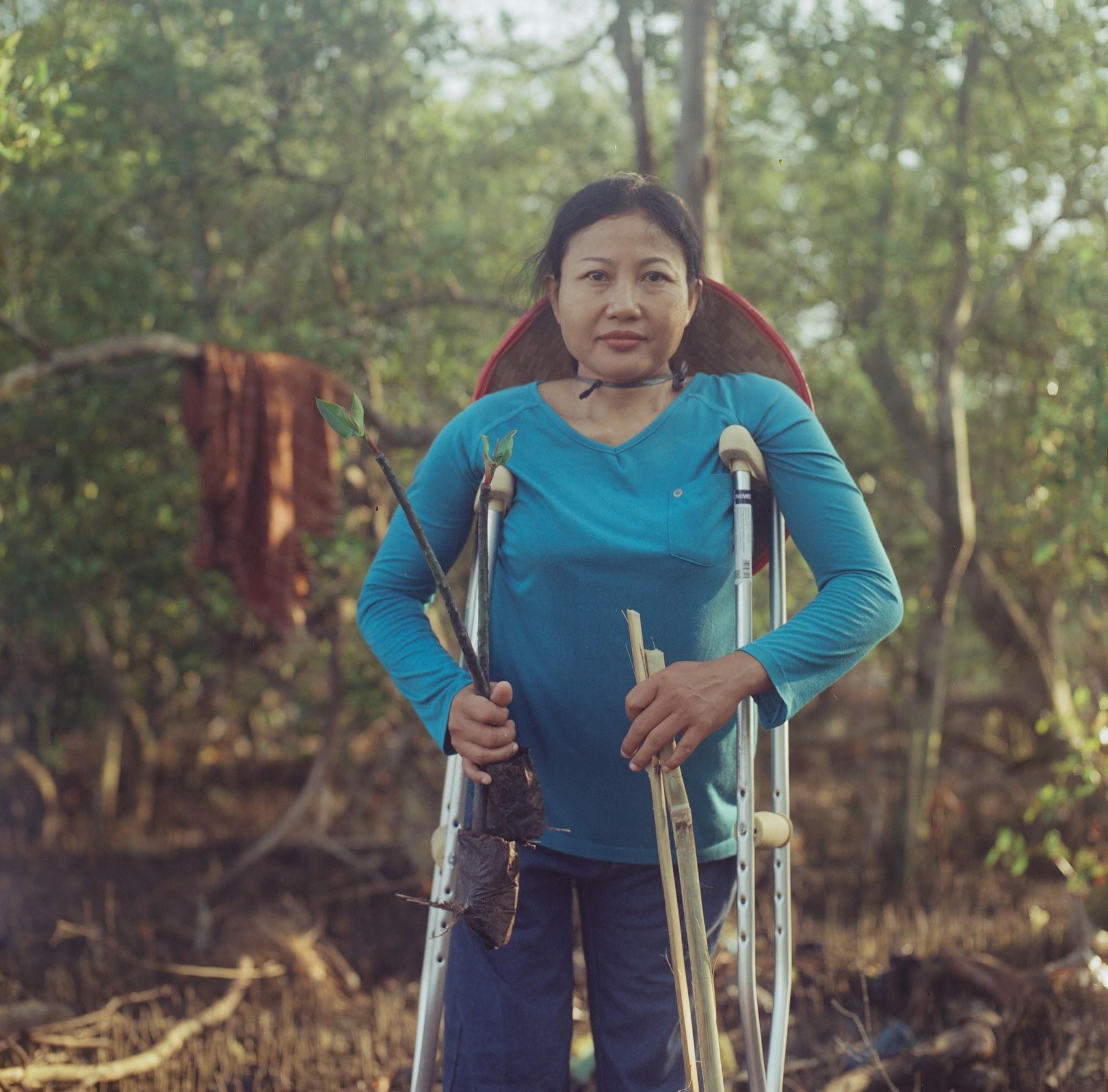
Ni Made Dwi Ardanayanti (50), ketua HWDI Jembrana. Mbok Dwi juga adalah seorang fashion designer di Jembrana, karya terakhirnya masuk ke Dekranasda Fashion Road Show. Advokasi yang dilakukan Mbok Dwi melahirkan Peraturan Desa Tuwed no 5 tahun 2025 tentang restorasi alam yang inklusif.
Hasselblad 500C/M (6×6) • IMAX 250D (120)
Ni Made Dwi Ardanayanti (50), chair of HWDI Jembrana. Mbok Dwi is also a fashion designer in Jembrana; her latest work was featured in the Dekranasda Fashion Road Show. Her advocacy gave rise to Tuwed Village Regulation No. 5 of 2025 on inclusive nature restoration.
Hasselblad 500C/M (6×6) • IMAX 250D (120)
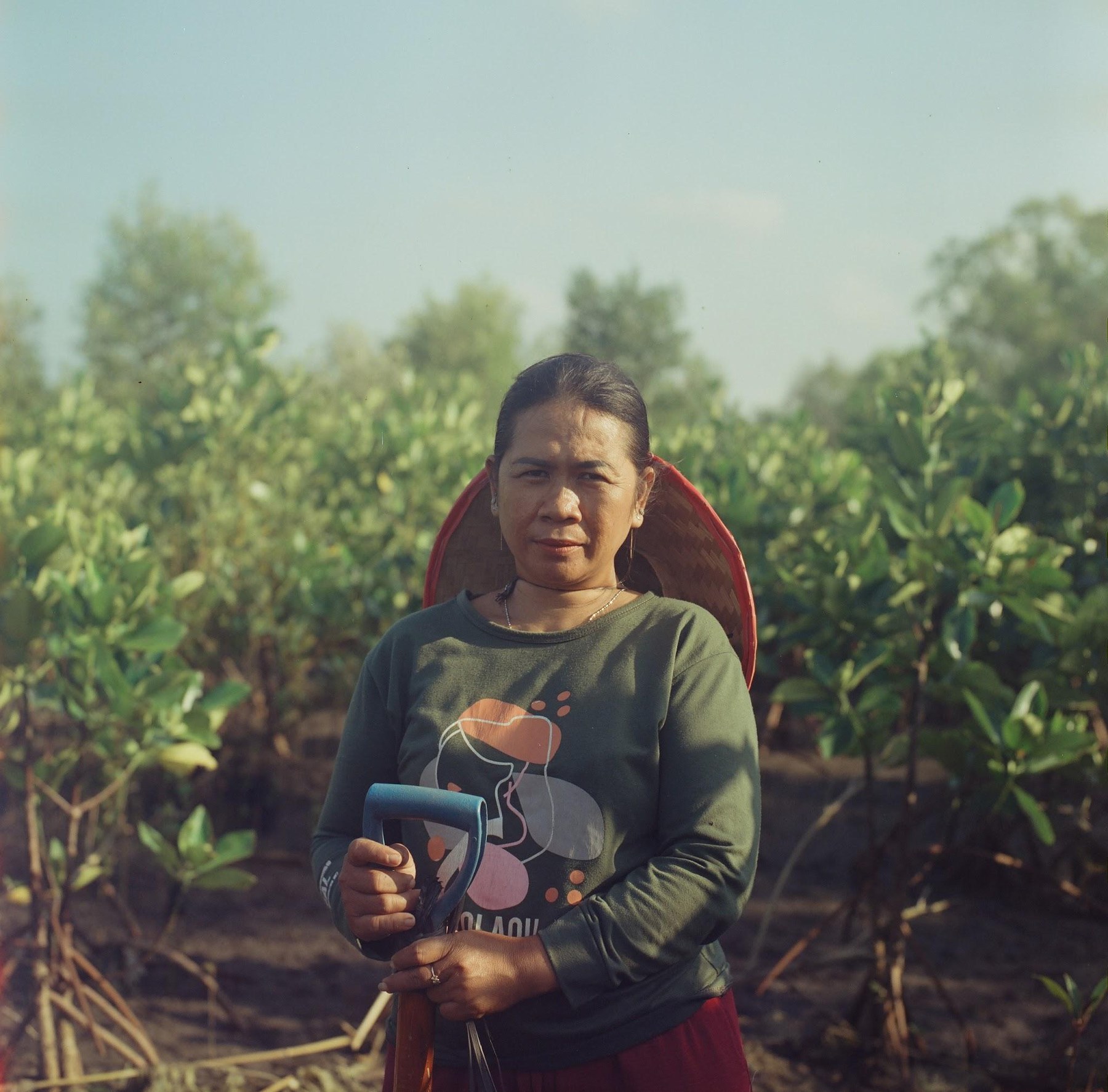
Ni Ketut Ariati (44) perempuan yang lahir dan berdarah Jawa, yang kemudian diadopsi oleh pasangan suami-istri Hindu sejak kecil. Kini ia menikah dengan keluarga kasta tinggi di Bali dan mendapat panggilan Jero. Jero artinya orang dalam puri/istana.
Ibu Jero adalah andalan tim HWDI dalam proses penanaman. Tidak mudah bagi Bu Jero untuk melangkah di lumpur, karena hanya satu kaki Bu Jero yang punya kekuatan penuh untuk menopang tubuhnya. Latar belakang Bu Jero sebagai petani membuat staminanya tetap prima di tengah kegiatan fisik yang berat. Memanggul sekop, membawa bibit-bibit bakau setiap hari, menanam di bawah terik matahari tidak pernah jadi masalah.
Hasselblad 500C/M (6×6) • IMAX 250D (120)
Ni Ketut Ariati (44) was born Javanese and, as a child, was adopted by a Hindu couple. She is now married into a high-caste Balinese family and is addressed as Jero, which means one who dwells within the puri, the palace.
Bu Jero is the HWDI team's mainstay in planting. Walking through the mud is not easy for her, as only one of her legs has the full strength to support her body. Her background as a farmer keeps her stamina strong through the heavy physical work. Shouldering a shovel, hauling mangrove seedlings every day, planting under the blazing sun: none of it has ever been a problem.
Hasselblad 500C/M (6×6) • IMAX 250D (120)
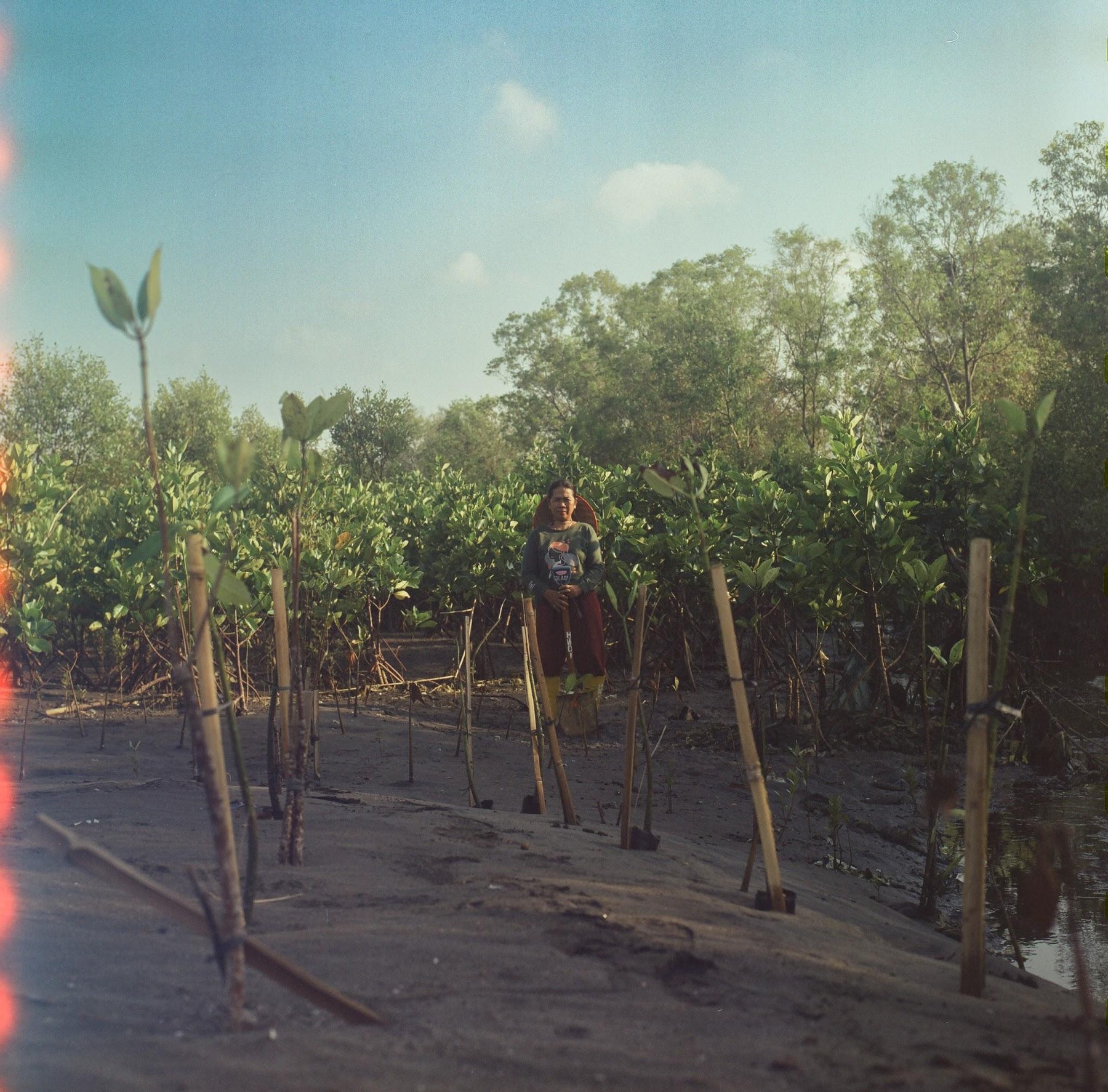
Bu Jero mengarahkan saya untuk memotretnya di lokasi ini, area kebanggaannya. Semua bakau yang tumbuh di sini adalah hasil karyanya. Setiap tanaman bakau di sini juga melalui proses Geo-Tagging. Sehingga lokasi tiap pohon bisa dilacak langsung lewat satelit. Bu Jero dan Mbok Dwi melakukannya satu per satu.
Proses Geo-Tagging ini dilakukan utamanya untuk tanggung jawab pendataan dari donor. Tim HWDI berharap jika eko-wisata mereka terwujud, setiap sukarelawan yang datang menanam, bisa tahu persis lokasi di mana pohon yang mereka tanam, bahkan saat mereka datang puluhan tahun nanti.
Hasselblad 500C/M (6×6) • IMAX 250D (120)
Bu Jero directed me to photograph her here, in the area she is proudest of. Every mangrove growing here is her work. Each one has also been recorded through Geo-Tagging, so the location of every tree can be tracked directly by satellite. Bu Jero and Mbok Dwi tagged them one by one.
The geo-tagging is done mainly to meet the donor's data-reporting requirements. The HWDI team hopes that once their eco-tourism plans are realized, every volunteer who comes to plant will know exactly where their tree stands, even if they return decades later.
Hasselblad 500C/M (6×6) • IMAX 250D (120)
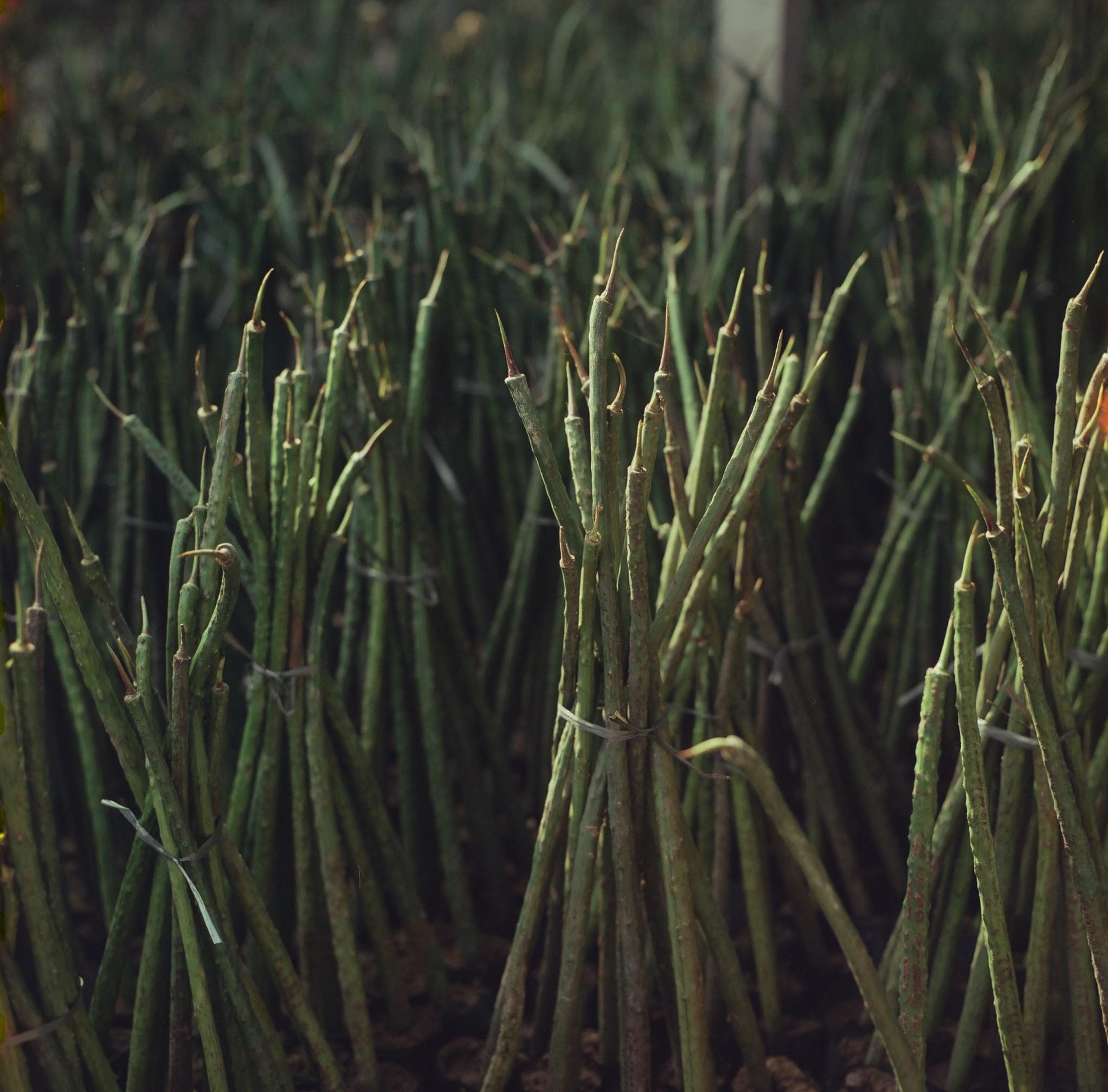
Bibit-bibit bakau di area pembibitan yang disponsori oleh The Asia Foundation sejak 2024. Hingga kini sudah lebih dari 120.000 bibit yang ditanam di Tuwed lewat program ini.
Hasselblad 500C/M (6×6) • IMAX 250D (120)
Mangrove seedlings in the nursery, sponsored by The Asia Foundation since 2024. More than 120,000 seedlings have been planted in Tuwed through this program so far.
Hasselblad 500C/M (6×6) • IMAX 250D (120)
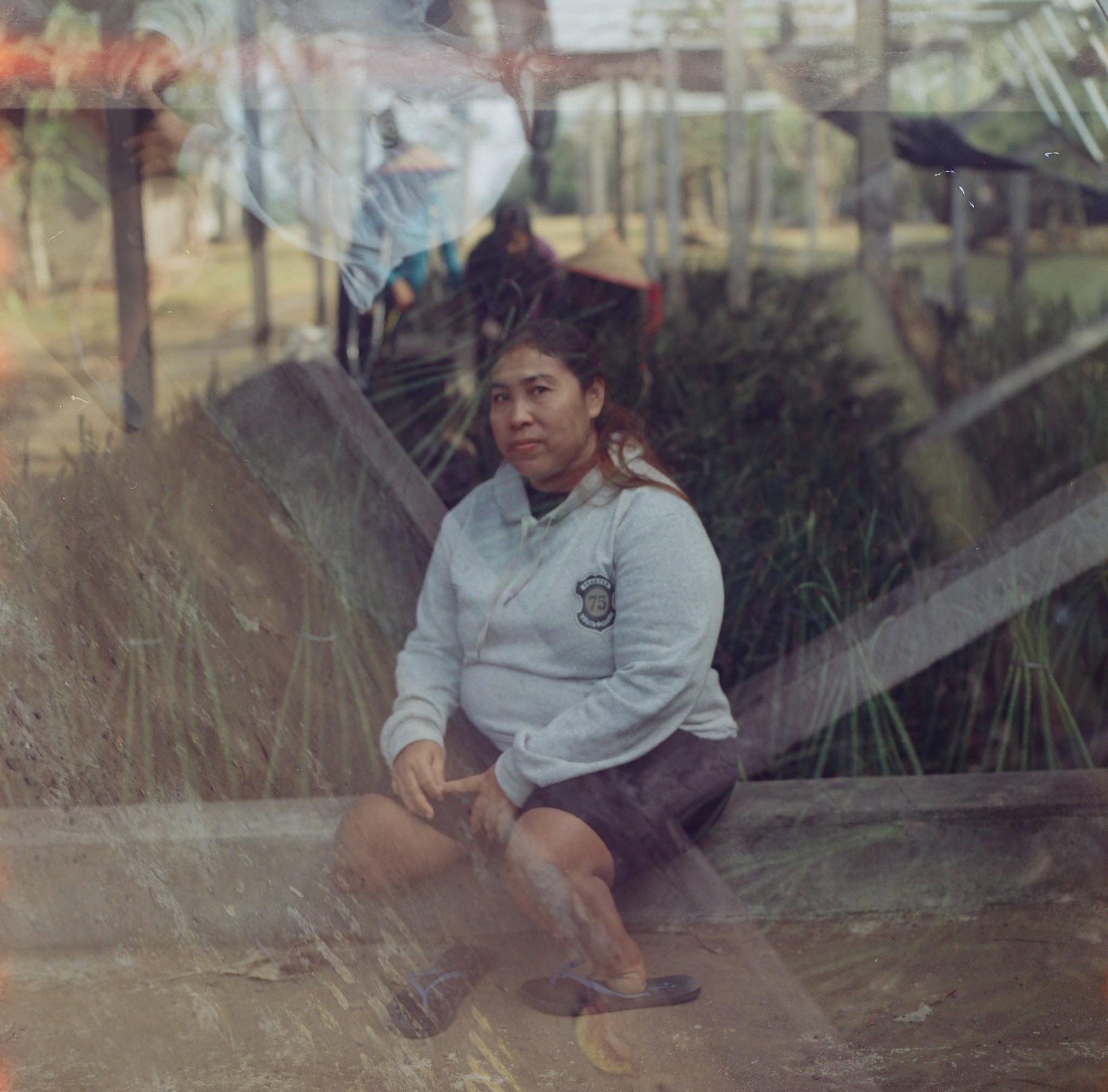
Dewa Ayu Made Karmilasari (45). Mbok Ayu pindah ke Tuwed setelah menikah. Pertama kali Ayu memiliki kursi roda adalah saat ia sudah menikah. Mobilisasi sehari-hari lebih nyaman ia lakukan tanpa kursi roda, hanya menggunakan sandal jepit. Ayu adalah bendahara dan admin HWDI Tuwed. Sejak muda ia sering mendapatkan pelatihan komputer hingga ke Yogyakarta.
Hasselblad 500C/M (6×6) • IMAX 250D (120)
Dewa Ayu Made Karmilasari (45). Mbok Ayu moved to Tuwed after she married, and got her first wheelchair only after marriage. For everyday mobility she is more comfortable without it, getting around in just a pair of flip-flops. Ayu is the treasurer and administrator of HWDI Tuwed. Since her youth she has taken computer training courses, travelling as far as Yogyakarta.
Hasselblad 500C/M (6×6) • IMAX 250D (120)
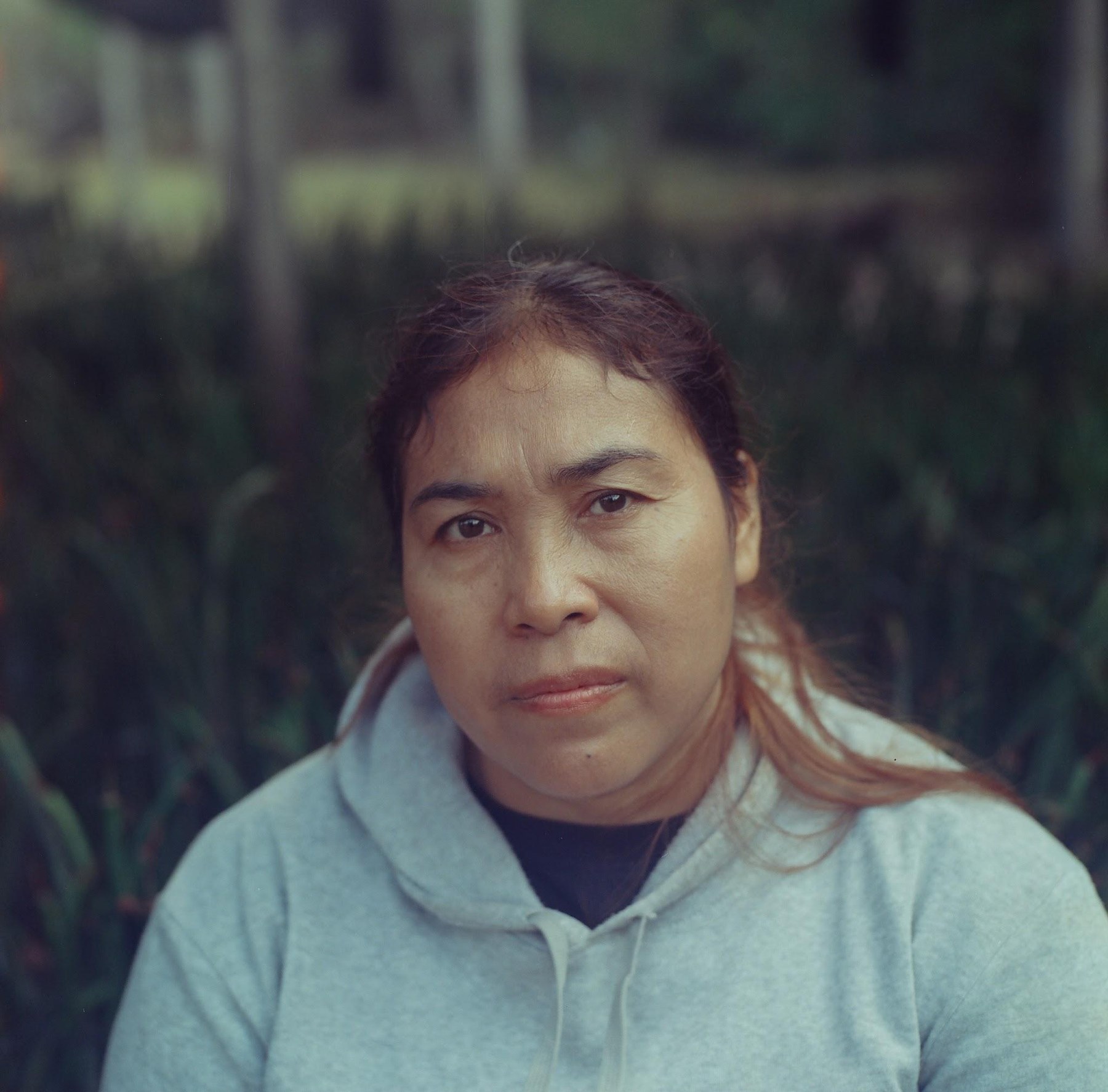
Menurut Ayu, ada sebagian masyarakat Bali yang punya stigma, menganggap terlahir sebagai difabel adalah buah dari karma buruk. Namun keluarga Ayu tidak percaya dengan hal tersebut. Ayu bersyukur bahwa desa tempat ia dibesarkan sangat suportif dan tidak pernah malu menerima dirinya. Sumber kekuatannya adalah keluarga yang sangat mendukung pendidikannya. Nenek Ayu rela menjual sapi keluarga agar Ayu bisa mendapat pendidikan hingga ke Yogyakarta.
Hasselblad 500C/M (6×6) • IMAX 250D (120)
According to Ayu, some in Balinese society hold a stigma that being born with a disability is the fruit of bad karma. Ayu's family never believed this. She is grateful that the village where she grew up was very supportive and never ashamed to embrace her. Her strength comes from a family that stood fully behind her education; her grandmother even sold the family's cow so Ayu could study as far away as Yogyakarta.
Hasselblad 500C/M (6×6) • IMAX 250D (120)
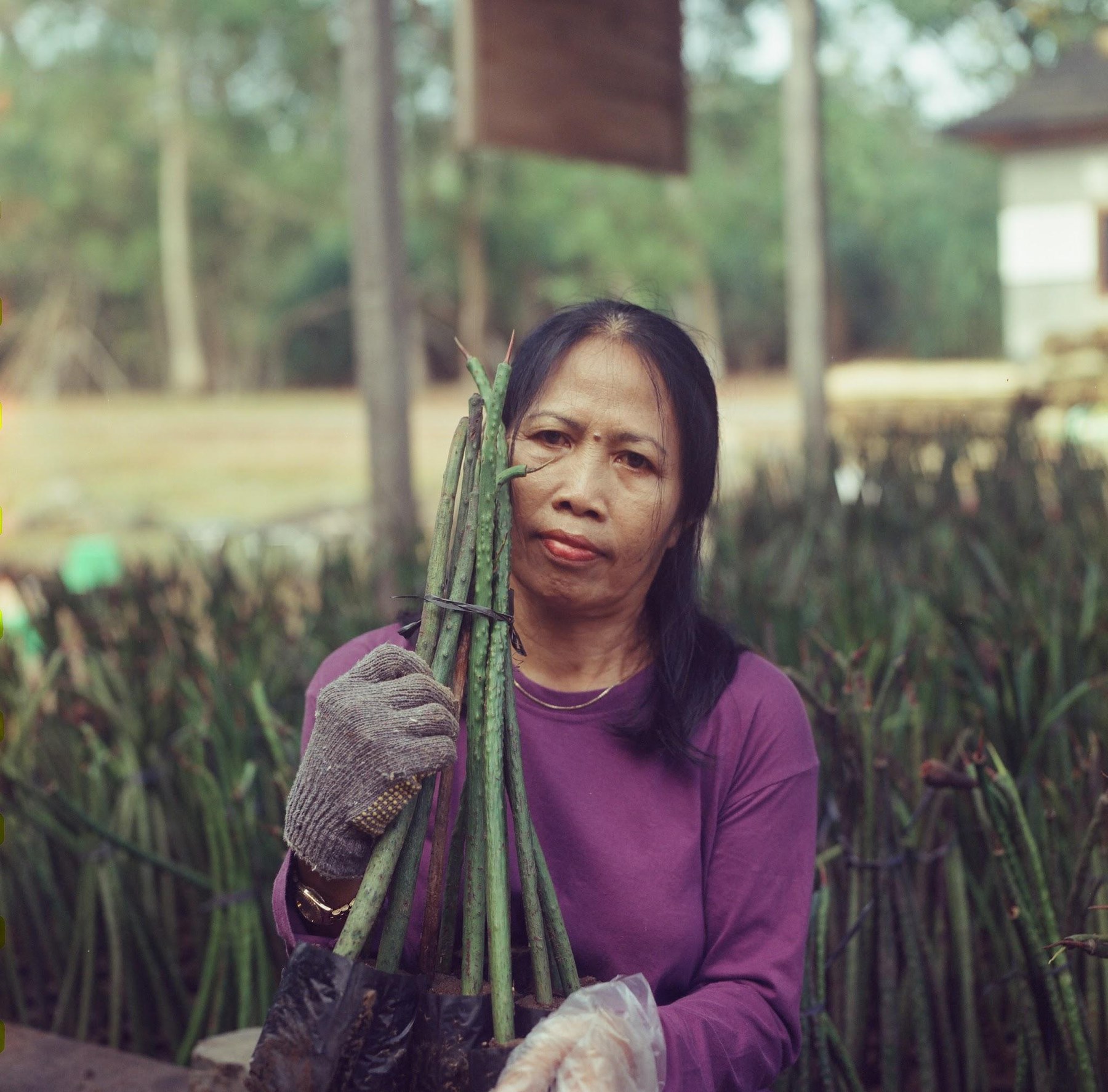
Putu Diastini (55), adalah anggota tertua di HWDI Jembrana. Selain bekerja di bagian pembibitan, Mbok Putu juga bekerja sebagai penjahit rumahan. Baginya kegiatan restorasi ini bukan hanya bermanfaat bagi lingkungan hidup, namun jadi tempat ia juga merestorasi jiwanya. Dulu pernah menikah, namun mbok Tu kini sudah bercerai. Ia kadang merasa kesepian, namun kegiatan bersama teman-teman HWDI membuatnya ceria dan bersemangat.
Hasselblad 500C/M (6×6) • IMAX 250D (120)
Putu Diastini (55) is the eldest member of HWDI Jembrana. Besides working in the nursery, Mbok Putu also works from home as a seamstress. For her, the restoration work benefits not only the environment; it is also where she restores her own soul. Once married, Mbok Tu is now divorced. She sometimes feels lonely, but time with her friends at HWDI keeps her cheerful and full of spirit.
Hasselblad 500C/M (6×6) • IMAX 250D (120)
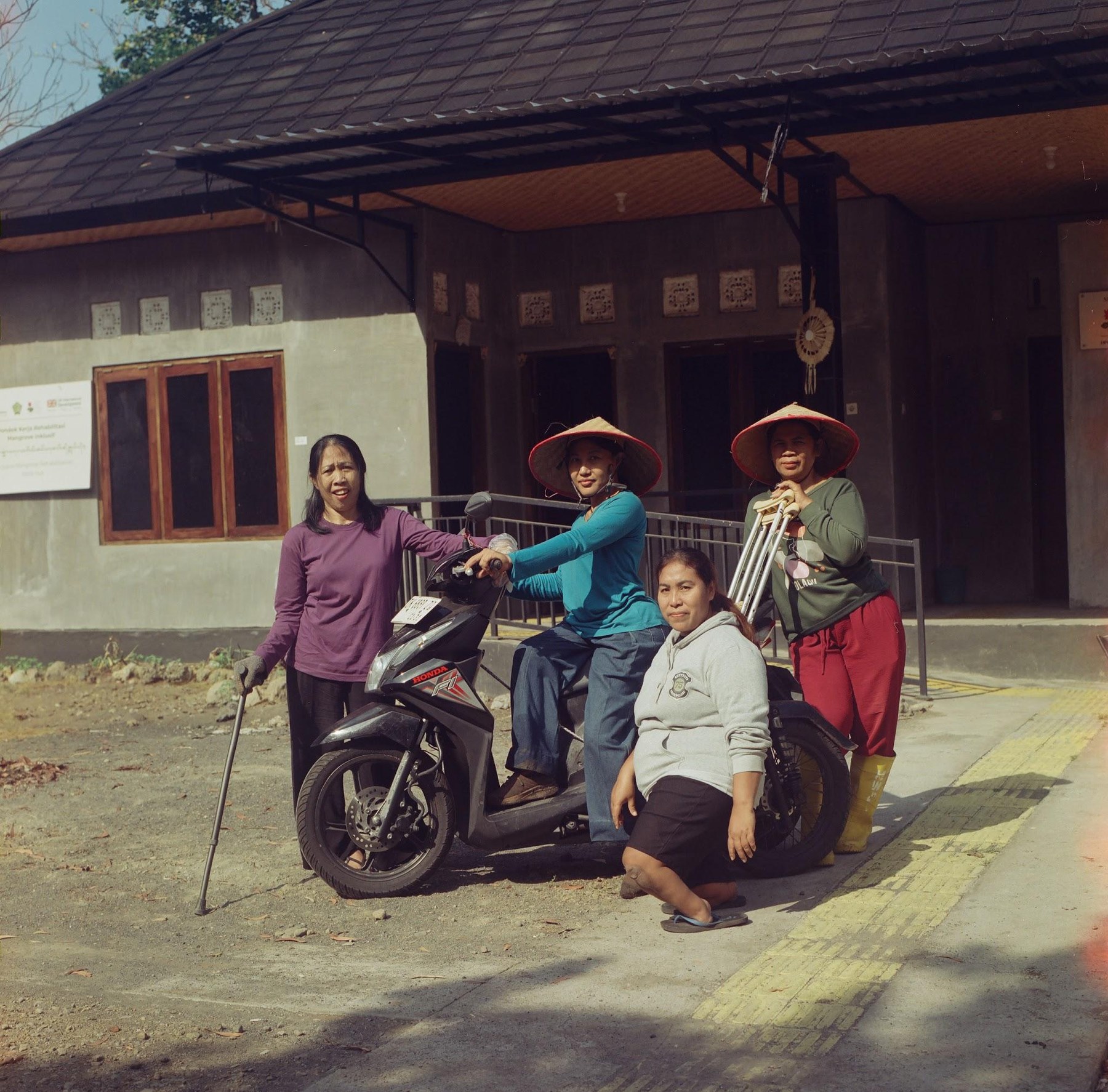
Foto grup HWDI Jembrana di depan Pondok Serba Guna tempat mereka berkumpul dan saling berbagi cerita. Sebelum pondok tersebut dibangun, setiap acara dan kegiatan kelompok bertempat di kediaman Mbok Dwi. Pada tahun 2024 The Asia Foundation membangun pondok agar para anggota bisa berkegiatan dengan lebih leluasa. Kini pondok serbaguna ini digunakan untuk berbagai kegiatan HWDI mulai dari rapat hingga penyimpanan alat-alat penanaman bakau.
Hasselblad 500C/M (6×6) • IMAX 250D (120)
Group portrait of HWDI Jembrana in front of the Pondok Serba Guna, the multipurpose hut where they gather and share stories. Before it was built, every group event and activity was held at Mbok Dwi's home. In 2024, The Asia Foundation built the hut so the members could work together more freely. Today it serves all kinds of HWDI activities, from meetings to storing mangrove-planting tools.
Hasselblad 500C/M (6×6) • IMAX 250D (120)
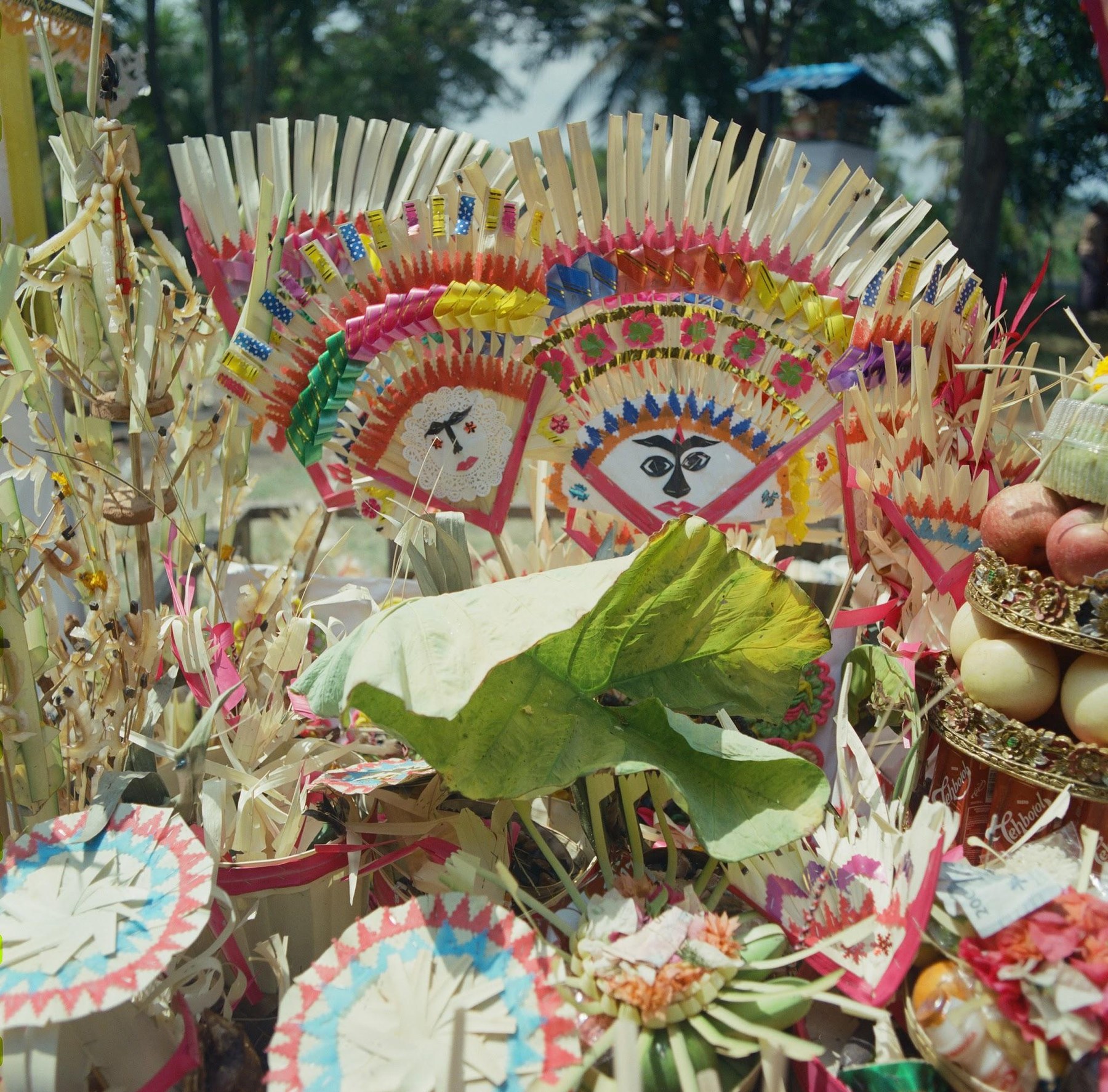
Masyarakat Bali memusatkan hidup mereka dalam rangkaian upacara adat. Sejak lahir hingga mati tidak terhitung banyaknya upacara adat yang harus dijalani seorang Bali. Gambar di atas adalah sesajen yang dihaturkan dalam rangkaian upacara Ngaben yang diadakan di Pura Prajapati Tuwed.
Hasselblad 500C/M (6×6) • IMAX 500D (120)
Balinese life is centered on a cycle of customary ceremonies. From birth to death, a Balinese person passes through countless rites. Pictured above are offerings presented during a Ngaben ceremony held at Pura Prajapati Tuwed.
Hasselblad 500C/M (6×6) • IMAX 500D (120)
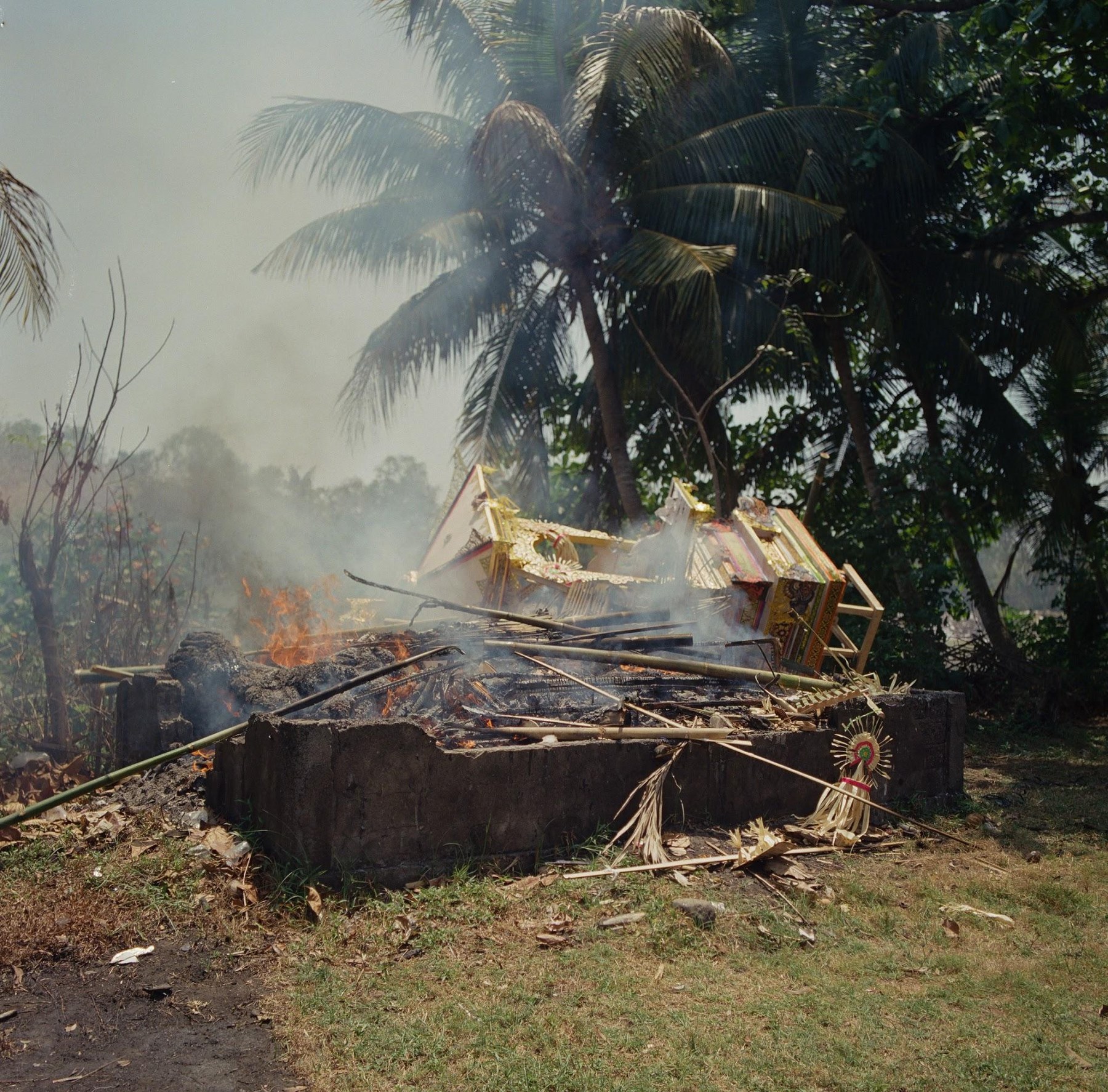
Upacara Ngaben adalah upacara kremasi jenazah yang diikuti dengan pembakaran menara pengusung jenazah dan berbagai sesajen lain yang sebagai simbol peleburan total. Upacara ini dilakukan di Pura Prajapati Tuwed, hanya beberapa ratus meter dari pondok serbaguna HWDI.
Hasselblad 500C/M (6×6) • IMAX 500D (120)
Ngaben is a cremation ceremony, followed by the burning of the tower that carries the body along with other offerings, a symbol of total dissolution. This one was held at Pura Prajapati Tuwed, just a few hundred meters from the HWDI multipurpose hut.
Hasselblad 500C/M (6×6) • IMAX 500D (120)
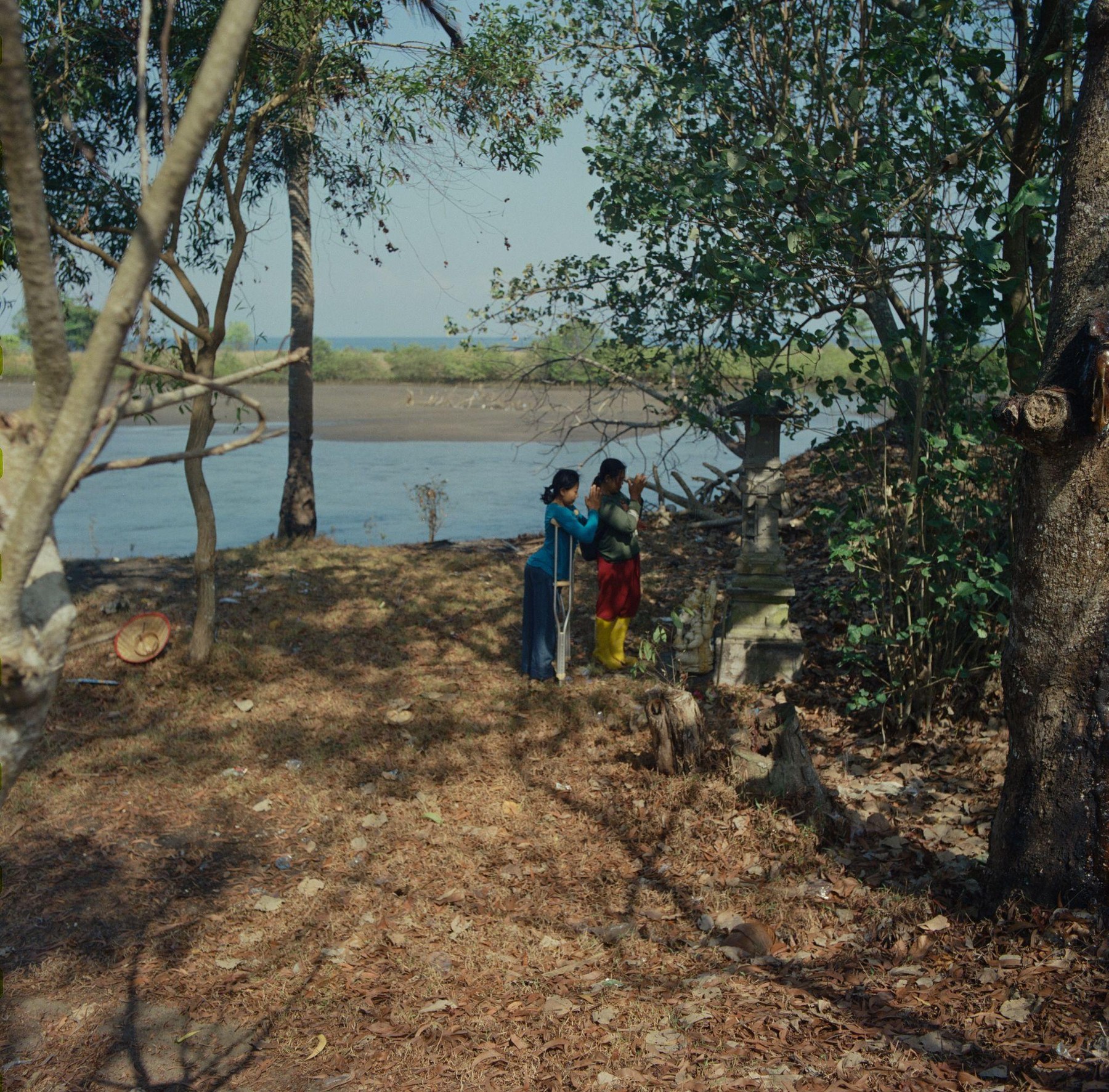
Dalam tiap kegiatan penanaman, Mbok Dwi & Bu Jero punya tempat untuk berhenti dan memberi jeda sejenak, yaitu dengan melakukan sembahyang di pelinggih yang tersebar di dalam hutan bakau. Area hutan adat yang sama dan dekat dengan tempat warga sekitar melakukan upacara-upacara adat.
Hasselblad 500C/M (6×6) • IMAX 250D (120)
During every planting session, Mbok Dwi and Bu Jero have a place to stop and pause for a moment: they pray at the pelinggih, small shrines scattered throughout the mangrove forest. It is the same customary forest area, close to where local residents hold their customary ceremonies.
Hasselblad 500C/M (6×6) • IMAX 250D (120)
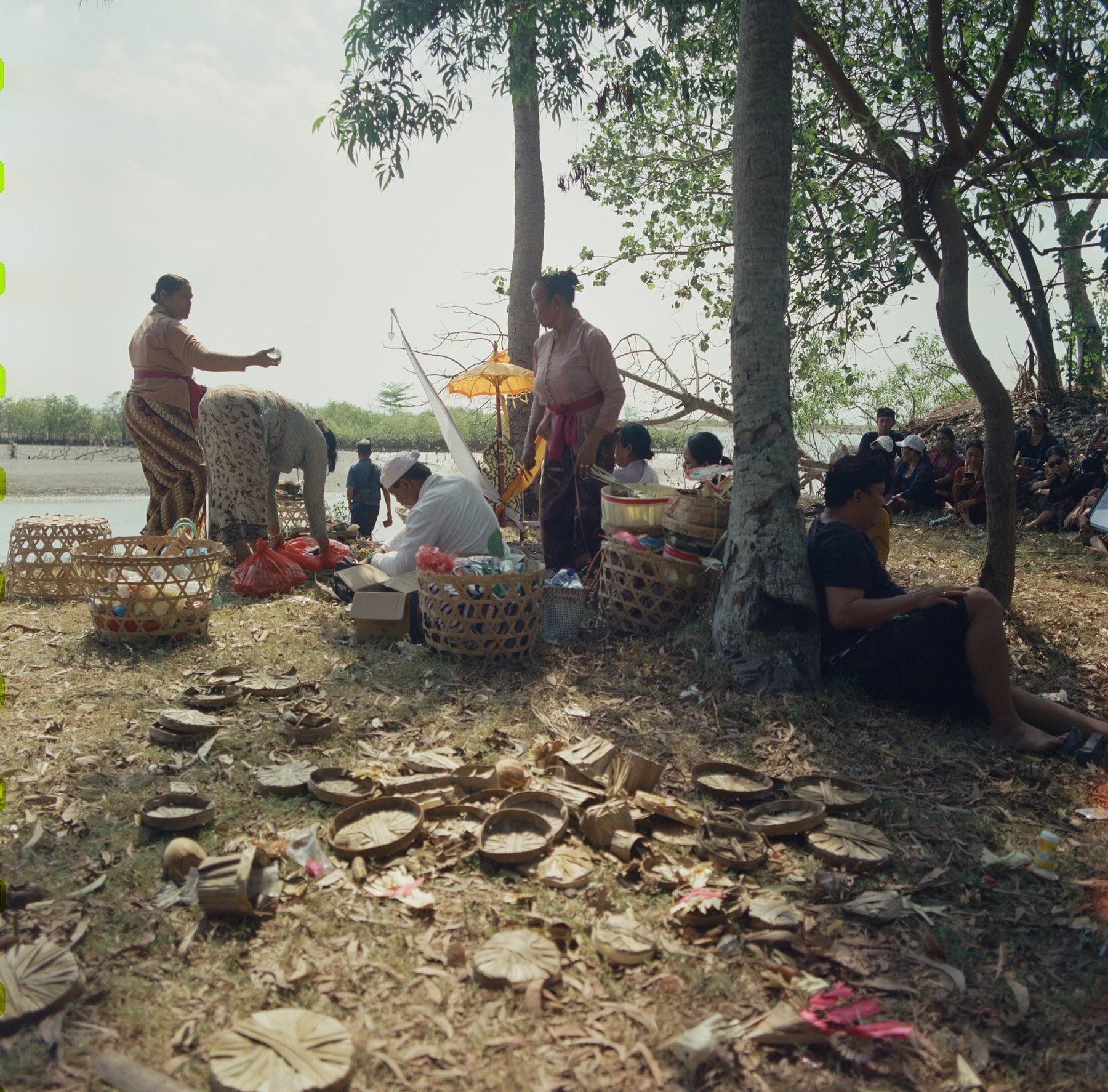
Kegiatan adat setelah prosesi Ngaben di tepi pantai, di daerah hutan bakau Tuwed. Hutan bakau Tuwed sedang dalam proses pengajuan status menjadi hutan adat. Pengesahan seharusnya terjadi Maret 2026 kemarin, namun belum keluar juga pengesahan dari pemerintah provinsi tentang hal ini.
Hasselblad 500C/M (6×6) • IMAX 500D (120)
Customary rites after the Ngaben procession on the shore, in the Tuwed mangrove forest. The Tuwed mangroves are in the process of being designated a customary forest (hutan adat). Approval was due in March 2026, but the provincial government has yet to issue it.
Hasselblad 500C/M (6×6) • IMAX 500D (120)
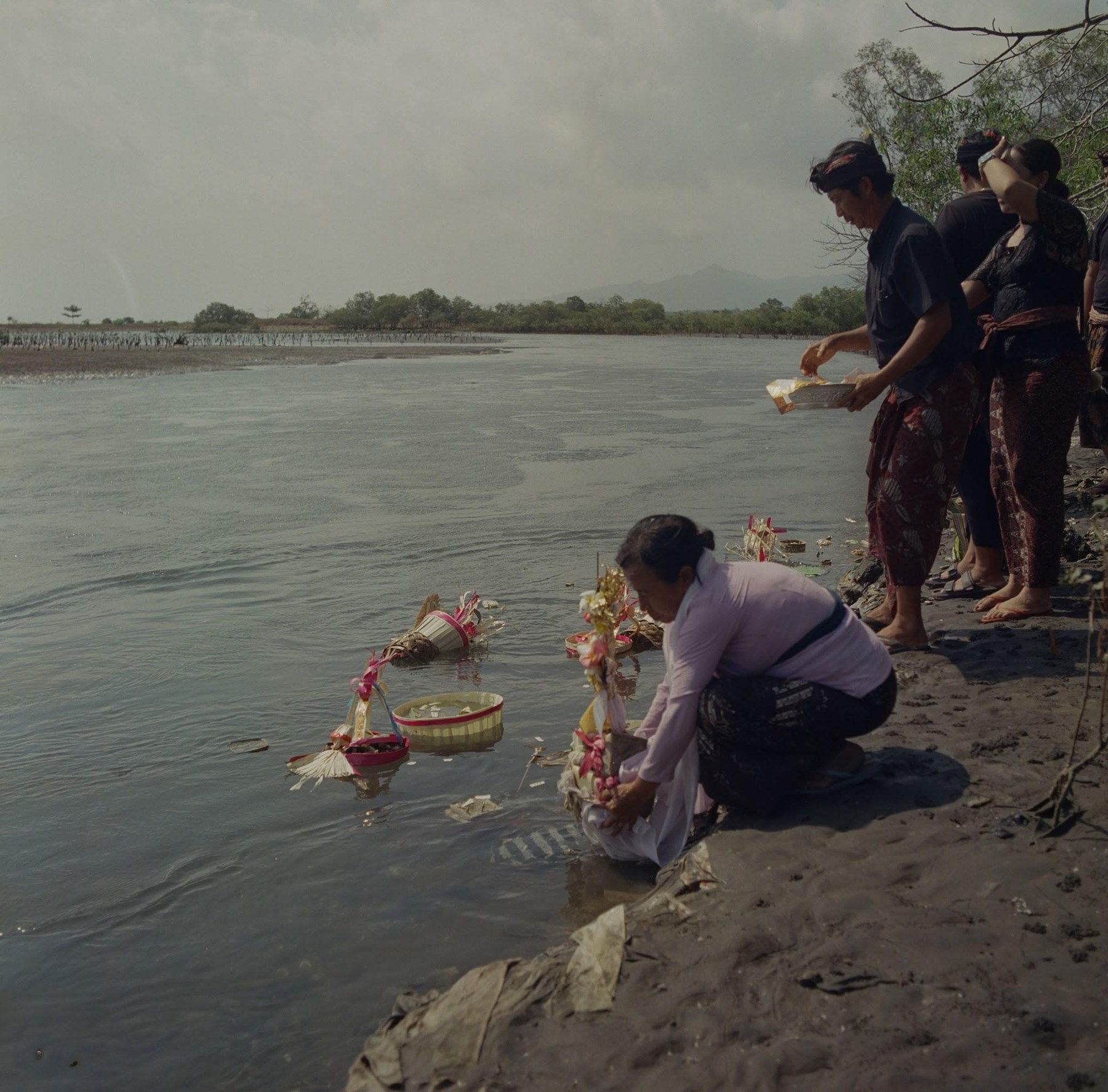
Abu jenazah dilarung ke lautan di hutan bakau Tuwed bersama dengan berbagai sesajen. Ini momen perpisahan terakhir keluarga dengan jenazah. Kini jenazah sudah resmi menjadi roh leluhur dan menyatu kembali dengan Brahman, roh kehidupan sejati.
Hasselblad 500C/M (6×6) • IMAX 500D (120)
The ashes are released into the sea at the Tuwed mangrove forest, together with various offerings. This is the family's final farewell. The departed has now formally become an ancestral spirit, reunited with Brahman, the true spirit of life.
Hasselblad 500C/M (6×6) • IMAX 500D (120)
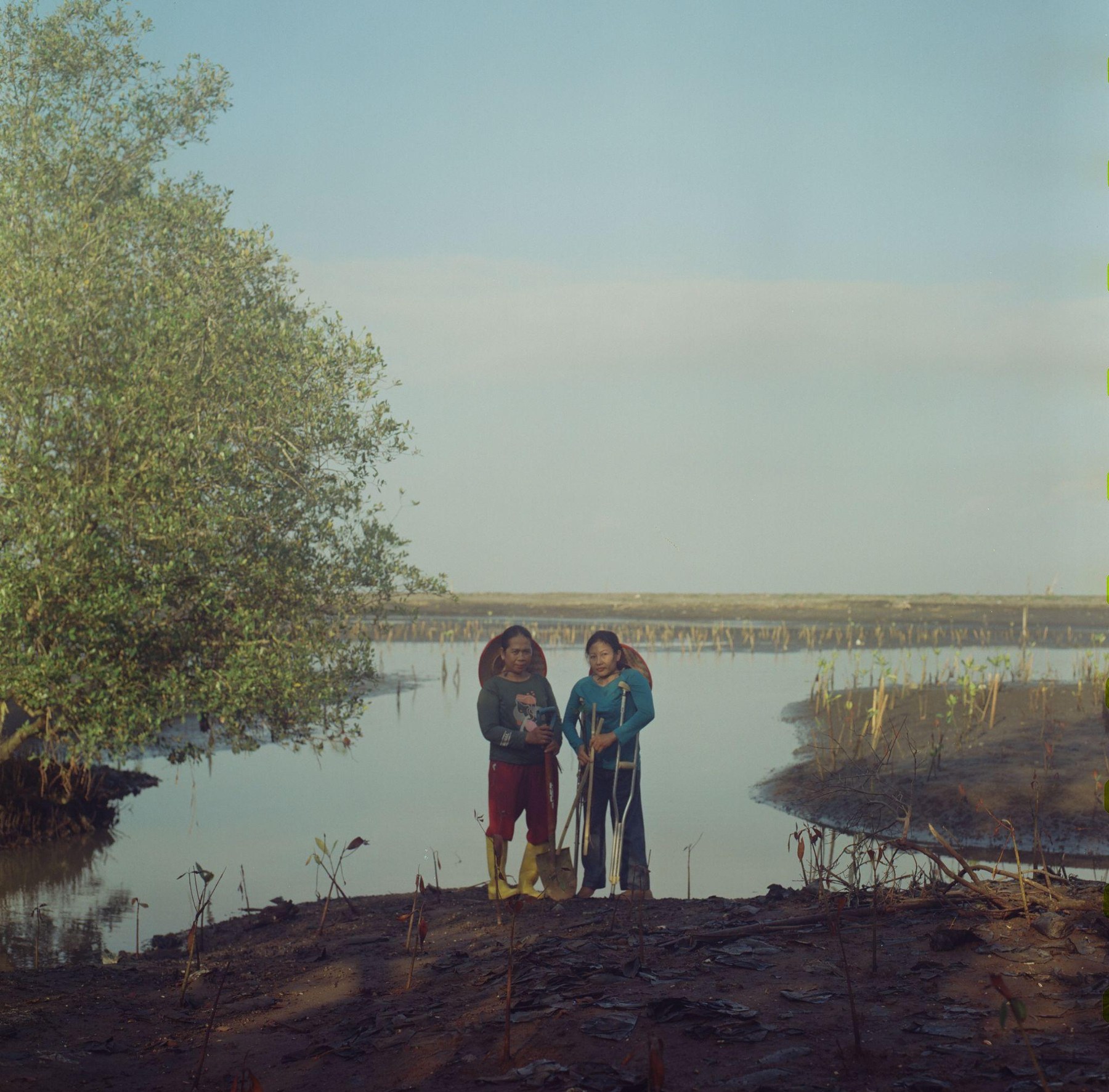
Mbok Dwi & Bu Jero berdiri di area restorasi bakau yang baru selesai ditanami. Setelah 2 tahun berjalan, program penanaman bakau dari The Asia Foundation sudah resmi selesai. Namun HWDI kabupaten Jembrana melanjutkan program ini dengan mandiri. Kini mereka akan membuka eko-wisata dan menjual bibit-bibit bakau tersebut tiap kali ada program CSR pemerintah atau perusahaan di Tuwed, Jembrana. Hasil dari penjualan bibit dan eko-wisata akan menjadi sumber dana operasional kegiatan restorasi dan penanaman bakau yang harus terus berjalan.
Hasselblad 500C/M (6×6) • IMAX 250D (120)
Mbok Dwi and Bu Jero stand in a newly planted section of the mangrove restoration area. After two years, The Asia Foundation's mangrove planting program has officially come to an end, but HWDI Jembrana Regency is carrying it on independently. They now plan to open eco-tourism and to sell mangrove seedlings whenever the government or companies run CSR programs in Tuwed, Jembrana. Proceeds from the seedlings and eco-tourism will fund the ongoing restoration and planting work, which must continue.
Hasselblad 500C/M (6×6) • IMAX 250D (120)
Exhibition — Glass House, Lumpini Park, Bangkok · 3–4 October 2026